A regular appointment for all teams.
User experience analysis is often a difficult topic to address. At Disneyland Paris, I implemented a monitoring format, presented quarterly to product, business, and marketing teams.
How to proceed?
- Select the most relevant survey based on your website.
- Deploy the study in production (or with testers using a scenario and control question), at a frequency aligned with product cycles.
- Analyze score evolution and share trends with teams to guide priorities.
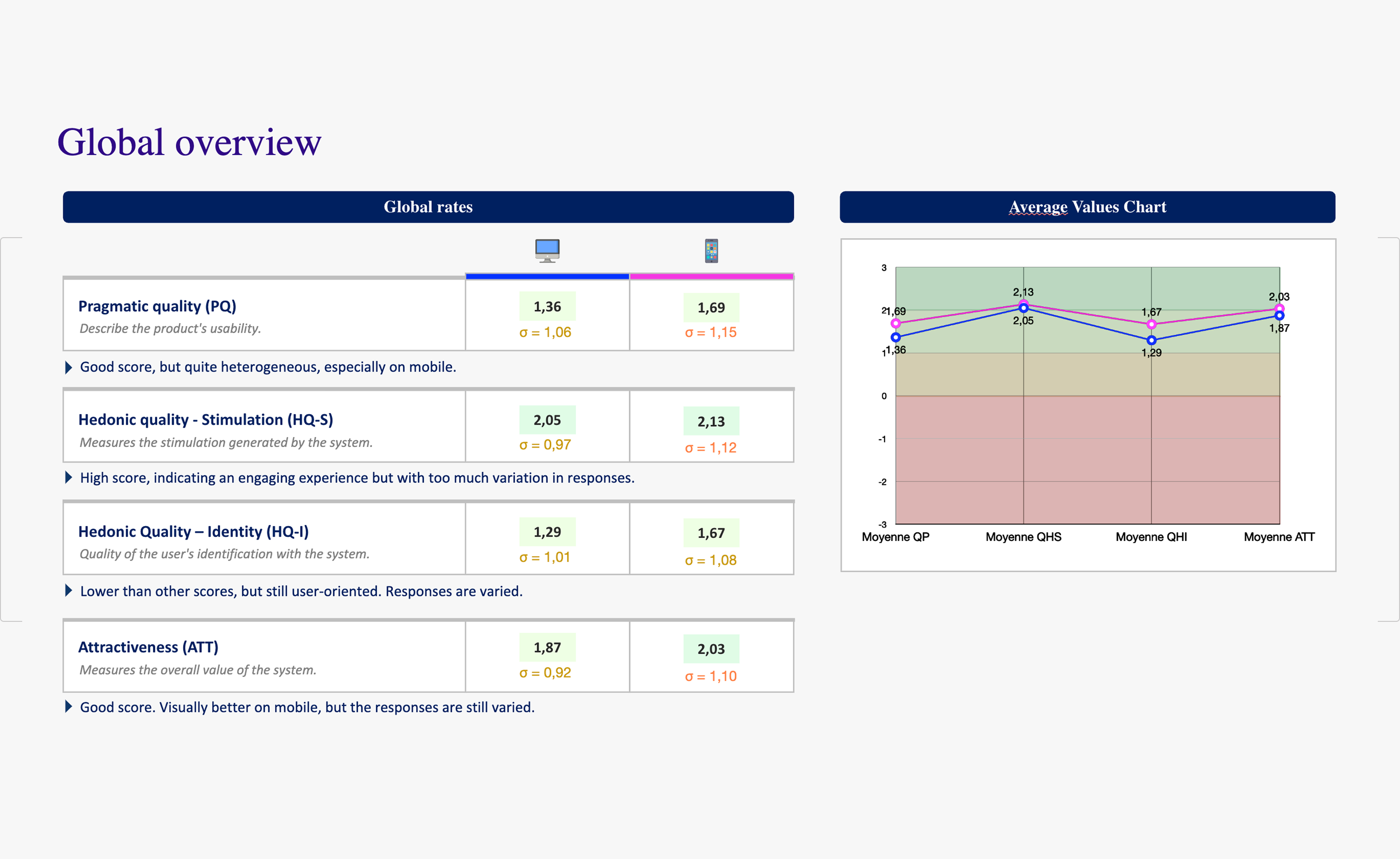
Measure the experience across 4 qualities with the Attrakdiff
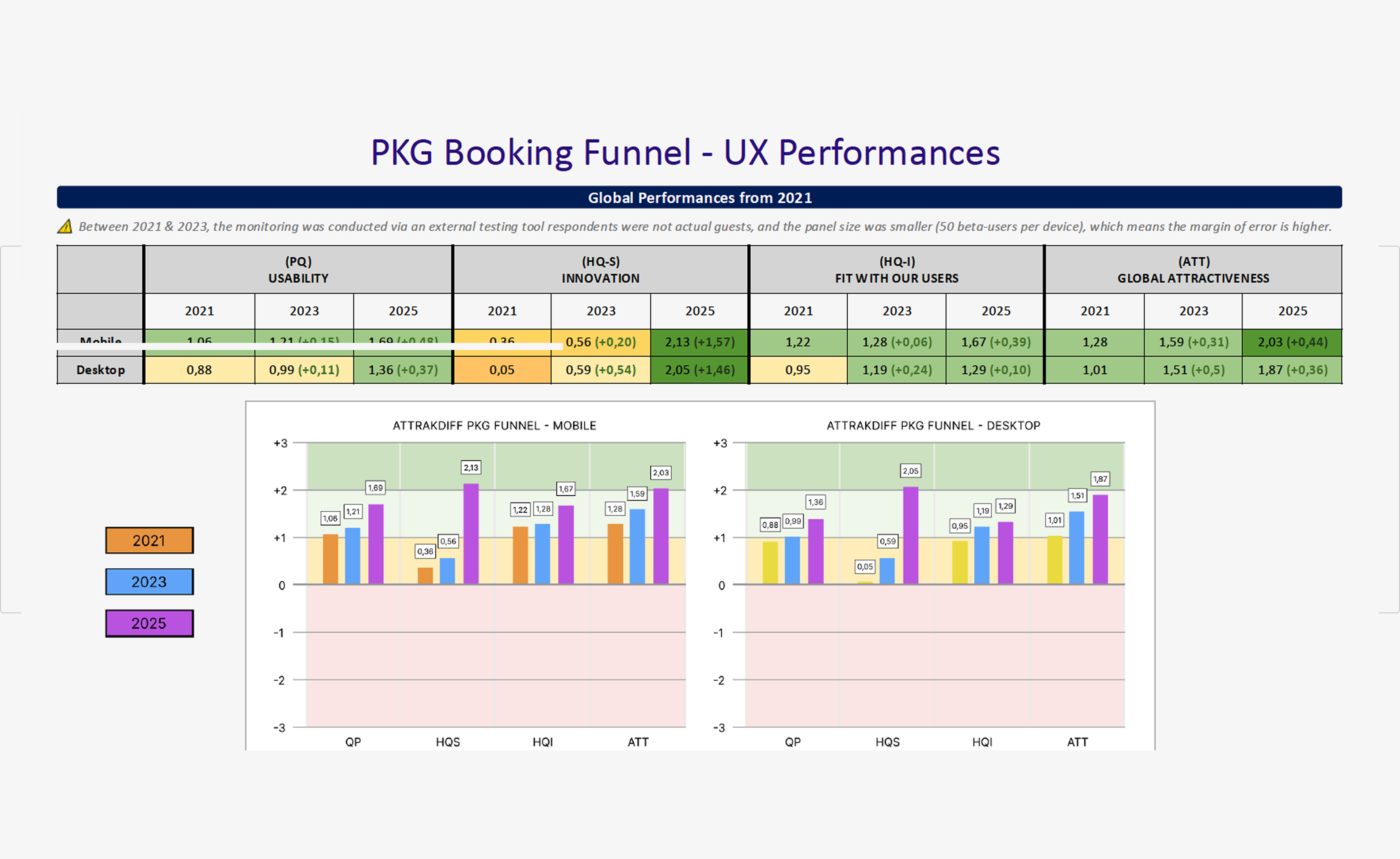
We used the Attrakdiff combined with a competitive analysis (in the same format) and qualitative research to collect user feedback over 3 years.
Attrakdiff allowed us to measure 4 qualities: pragmatic quality, hedonic quality–stimulation, hedonic quality–identity, and overall attractiveness of the journey.
Tracking these metrics over time showed a clear improvement in the booking experience.
From 0,56% to 2,13 on mobile (HQ-S) on mobile et +60% on usability (PQ).
The beginning of a new era!
Making data more understandable through Score Cards
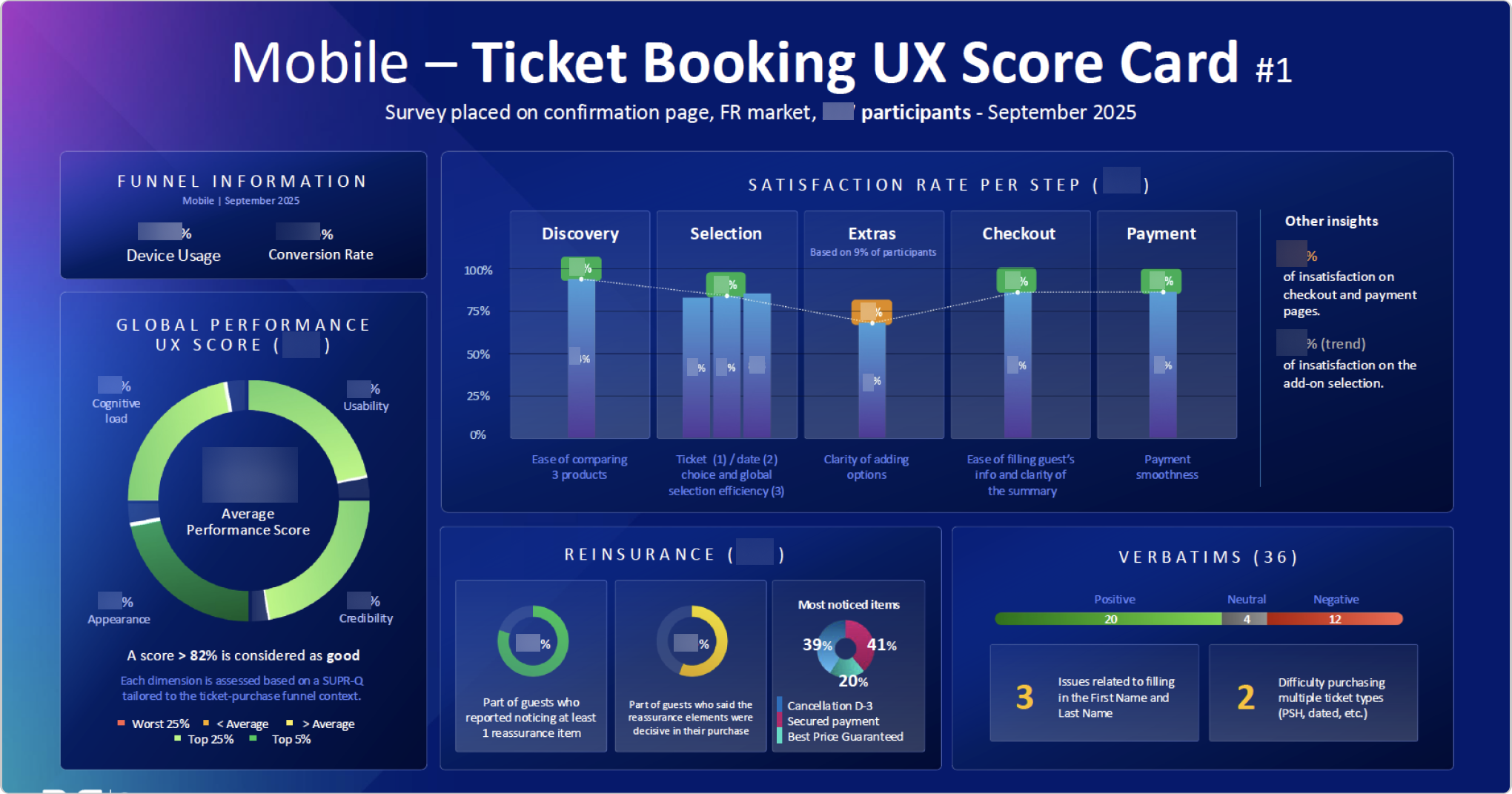
In February 2025, we launched a new initiative: moving from AttrakDiff to Score Cards.
The objectives were to:
• Make data easier to understand
• Better demonstrate the work done by designers
• Improve the efficiency and consistency of data collection
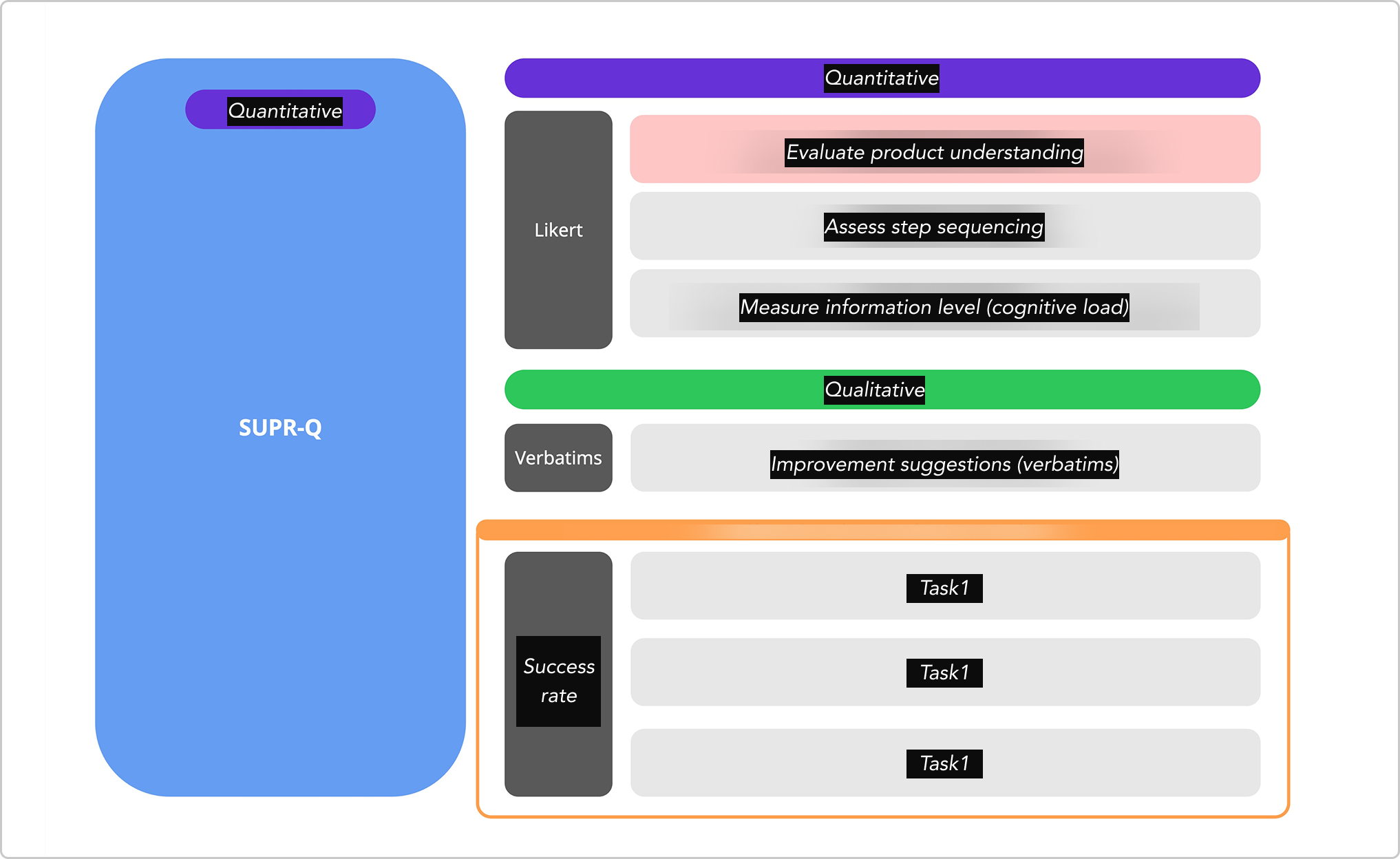
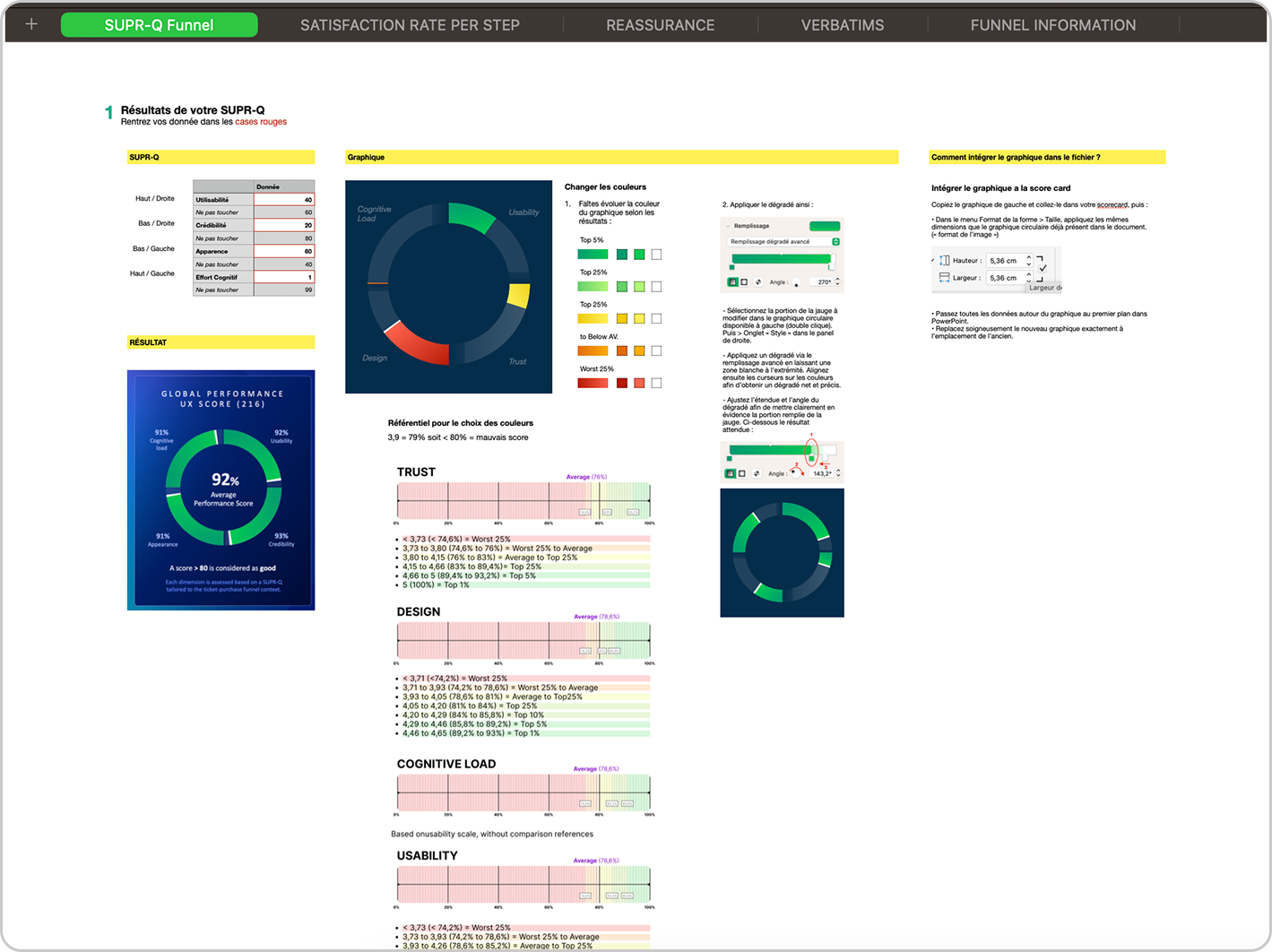
We used a re-interpretation of the SUPR-Q for the associated journeys, combined with a questionnaire on completed steps and qualitative data.
UX Score Card for Ticket Booking Funnel
The main user journeys have been identified, and we regularly deliver scorecards based on the specific goals of each journey. I standardized the entire scorecard process by creating a centralized reporting framework where UX designers within product squads can input their data and generate scorecards independently.
Post-purchase rationalization bias
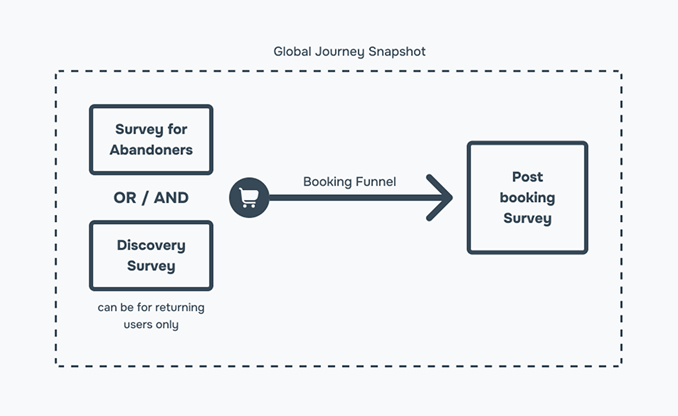
The importance of evaluating a journey at multiple stages
When evaluating a product, especially in eCommerce, it’s crucial to reach both bookers and abandoners. The strategy involves using two sruveys, either at different stages of the journey or by re-targeting abandoners to understand main frictions.
All data are presented together to provide a snapshot of the overall experience across the journey.
AI Automation
I'm currently working on a process to automate AI monitoring, using AI to generate scorecards directly from raw survey data rather than building them by hand. The next step is to track not just the score itself, but its evolution over time, an evolution of the evolution, to surface how each step of the journey is trending release after release, without manual reporting.